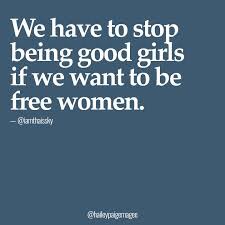
Thank you, AI!
(Not my writing but definitely good to share)
In discussions where men define or dictate what a “nice girl” should be or do, misogyny and sexism can surface in several ways:
- Enforcing gender stereotypes and restricting autonomy: The “nice girl” trope often carries expectations of women being passive, compliant, agreeable, and prioritizing others’ needs over their own. When men use this label to judge or prescribe women’s behavior, they reinforce these stereotypes and implicitly limit women’s freedom to express themselves, make their own choices, and pursue their own goals without fear of being labeled as “un-nice” or “unfeminine”.
- Undermining women’s assertiveness and leadership potential: The pressure to be “nice” can hinder women’s assertiveness in the workplace and in personal relationships, potentially leading to their contributions being undervalued or their assertiveness being misconstrued as aggressiveness. This can be particularly problematic in professional settings where women are expected to be both competent and liked to be considered influential leaders, according to HRMorning.
- Perpetuating the “good girl/bad girl” dichotomy: By defining a “nice girl” according to specific standards, men can implicitly create a dichotomy where women who deviate from these standards are labeled as “bad” or undesirable. This can contribute to internalized misogyny, where women may judge each other based on these societal expectations and strive for male approval.
- Creating a vulnerability to manipulation and exploitation: The “nice girl” conditioning, with its emphasis on people-pleasing and conflict avoidance, can make women vulnerable to manipulation and abuse in relationships. As one Reddit user noted, focusing on accommodating others and avoiding confrontation can blind women to warning signs and prevent them from protecting themselves,.
- Reinforcing the male gaze and objectification:In some cases, the concept of a “nice girl” can be linked to the male gaze and the objectification of women. The pressure to conform to an idealized image of femininity, partly driven by a desire for male approval, can lead women to focus on their outward appearance and neglect their inner self.
In short, when men dictate what a “nice girl” should be or do, it can be a manifestation of misogyny because it often involves imposing limiting expectations, undermining women’s autonomy, and reinforcing harmful stereotypes that ultimately disadvantage women in various aspects of their lives.

 WhatsHerName Writes